2025: The Year Naked Ambition Got Punished
An End-of-Year Accounting of Power Shifts in Sports Media, Media Rights Leverage, and Strategic Misreads
“Markets can remain irrational longer than you can remain solvent.”
John Maynard Keynes
The Moment an Asset Re-Entered the Room
2025 was the year naked ambition got punished.
Not quietly. Not philosophically. Financially.
Companies that chased scale by overpaying for certainty instead of preserving leverage felt it first. Platforms that locked themselves into long-term commitments to eliminate short-term risk discovered they had also capped their upside. And assets that had coasted for years on momentum alone without being stress-tested by the market were finally forced to show their work.
This was not about growth slowing. It was about accountability arriving.
The market stopped rewarding motion and started demanding position. Not who was loud. Not who moved first. But who actually controlled something scarce, durable, and defensible when the calendar went dark.
Everything that followed flowed from that shift.
By the time the year reached its final weeks, the posture of the industry changed. Not fewer conversations. Fewer reckless ones. Negotiations that had dragged on for quarters compressed. Decisions that had been deferred under the assumption that the next rights cycle would fix everything suddenly required answers.
Live-event noise stayed loud. Fight cards, signings, and short-term activations continued to churn. But underneath it, the real recalibration was happening elsewhere.
Media rights tilted. Libraries and back catalogs stopped being treated as filler and started being modeled as ballast. Platforms began planning not just for tentpole nights, but for the long stretches in between when live inventory thins and audience retention becomes the actual product.
2025 was the year those patterns stopped hiding in plain sight.
And nowhere did that reveal itself faster than in the one place the industry had stopped taking seriously.
When Existence Stops Being Enough
For more than 20 years, TNA Wrestling has occupied one of the safest lanes in the business. Not success. Not failure. Survival.
The company produced television, maintained continuity, and avoided collapse through multiple ownership regimes while absorbing an annual cycle of obituaries that never quite came true. That treadmill existence insulated it from decisive judgment. As long as the promotion kept running, no one was forced to ask what it was actually becoming.
Under Anthem Sports & Entertainment, that posture largely held. Anthem stabilized the asset, preserved its tape library, and ensured operational continuity. What never arrived was a redefinition. No national identity push. No differentiated positioning. No marketing spine that reframed TNA as anything other than a legacy property that endured.
Existence, for a long time, was enough.
That lane disappears the moment a real network enters the room.
The AMC Networks deal did not alter perception. It altered exposure. National distribution did not create buzz. It created comparability. Once TNA entered a true national carriage environment, it stopped being judged against its own past and started being evaluated alongside other programmable wrestling assets competing for advertiser dollars, scheduling priority, and long-term utility.
That shift happens on paper before it happens on social media.
Comparability does not mean creative parity with AEW or developmental overlap with NXT. It means the asset is now legible to financiers. The video library becomes a quantifiable backstop. The media rights fee becomes a benchmark. And the rest of the business is forced into the same valuation framework as every other nationally distributed property.
Once that chain starts moving, the calendar stops being a friend.
TNA chased relevance long enough to finally catch it. The problem is what comes next.
A national television deal forces questions survival never had to answer. What is the brand without borrowed WWE association? What original heat exists independent of partnership gravity? What marketing infrastructure supports a national launch beyond the rights fee itself?
A media deal buys exposure. It does not supply identity.
According to individuals familiar with Anthem’s financing, the AMC agreement coincides with increasing lender scrutiny at the parent-company level. That pressure is visible in public filings.
In an August 2025 earnings call, lender CION Investment Corp disclosed that a newly issued term loan tied to Anthem Sports had been classified as non-accrual following a debt recapitalization that split prior obligations into higher-yield tranches.
In lay terms, non-accrual status does not mean default. It means lenders are no longer assuming timely repayment and are actively reassessing risk.
Separate SEC disclosures from Portman Ridge Finance Corporation outline Anthem’s reliance on higher-yield revolving credit facilities, a signal that capital has become more expensive and flexibility more constrained.
The pattern is not collapse. It is compression.
Some non-core entertainment investments have already been sold, including the divestiture of Gravitas Ventures to Shout! Studios in 2025, as Anthem rebalances its portfolio and prioritizes capital toward core media and rights businesses.
With a national television deal now in place, TNA is no longer an abstract holding kept alive by inertia. It is an asset with defined inputs, visible outputs, and a valuation that can be modeled.
When that milestone gets hit, the market starts asking a different question.
The AMC Number That Changed the Temperature
The first tell was simple. The deal stopped being theoretical.
For years, TNA lived in a fog of soft math and speculative ranges. Numbers were floated. Assumptions were traded. Nothing carried consequence because nothing was fixed. That ended the moment a real network put a real price on the asset.
Earlier this month, I reported that TNA’s multi-year U.S. rights deal with AMC landed around $30M, with a January 15, 2026, launch date.
In that same reporting, I outlined that WWE’s agreement with TNA includes a 60-day termination clause, and that the AMC deal activates the window where the clause can be evaluated. That evaluation is being conducted with the expectation that the partnership will be wound down once the window closes.
That word matters. The option is the leverage.
A defined rights fee does more than generate headlines. It changes behavior. Lenders stop debating hypotheticals and start stress-testing downside. Potential buyers stop arguing over narrative and start building models. Partners reassess what they are conceding now that the exchange rate is no longer vague.
Once the number is real, leverage becomes measurable.
The Problem Inside TNA That Everyone Whispers About
If TNA Wrestling intends to capitalize on the AMC opportunity and present itself as a serious, transferable asset, one internal issue can no longer be deferred.
Tommy Dreamer and Delirious.
Inside and around the company, the current creative structure is widely viewed as a limiting factor as TNA enters its most consequential business window in years. The criticism is not personal. It is structural. It centers on creative direction, production consistency, and whether the existing leadership model is equipped for the scale, scrutiny, and financial audience that accompany national distribution.
That context matters when examining Carlos Silva’s expanded on-screen presence. Silva was not elevated simply as a character choice. He was positioned as a front-facing executive voice for a broader constituency than fans alone. As TNA’s ambitions shifted toward valuation, partners, and lenders, the company needed a figure who could speak credibly to the business community.
This mirrors a pattern seen elsewhere in combat sports. Professional Fighters League (PFL) elevated John Martin in part to serve as a disciplined public operator while founder Donn Davis remained behind the scenes. In both cases, the audience was not just viewers. It was finance.
According to sources familiar with internal decision-making, the push for increased executive visibility at TNA was driven largely by Dreamer and Delirious, whose creative influence increasingly emphasized leadership presentation during a period when perception and valuation were becoming inseparable.
The concern, however, is that visibility and continuity have moved together even as confidence in the underlying creative framework has not advanced at the same pace. As expectations rise externally, internal questions persist about whether the current structure can scale with them.
Within TNA, Dreamer and Delirious are increasingly viewed not as catalysts but as a ceiling.
That assessment is shaped in part by history. Delirious spent more than a decade as the primary creative architect of Ring of Honor, including during periods of acute institutional stress. His tenure encompassed ownership transition under Sinclair Broadcast Group, prolonged operational uncertainty, and the COVID-era shutdowns that ultimately forced ROH to suspend operations in 2021.
That experience cuts both ways. It reflects familiarity with crisis conditions and an ability to keep a product functioning amid instability. It also underscores how often Delirious’s leadership has coincided with periods of contraction, cost containment, and strategic retrenchment rather than sustained expansion or brand acceleration. The question is not whether he can survive pressure. It is whether he has demonstrated the capacity to convert pressure into forward momentum when the stakes and visibility increase.
At a moment when valuation, perception, and execution are directly linked, continuity without recalibration carries consequences.
The Directive That Quietly Reached Its End
Carlos Silva did not arrive to oversee stasis. He arrived with a mandate tied to national relevance and a timeline tied to results.
Multiple people familiar with internal planning describe an explicit runway built around restoring reach, repairing media credibility, and making TNA transferable again. The AMC deal served as the checkpoint that turned theory into terms.
As stated before, the AMC deal is a multi-year deal that landed around $30M. That number creates a valuation floor. It gives lenders an anchor. It gives buyers a baseline. It forces every internal decision to be judged against real revenue.
Silva publicly framed TNA’s media rights value in the $7M to $10M annual range in multiple interviews this year, including appearances with Ariel Helwani. That framing served a purpose. It normalized the asset in a way TNA had not been normalized in years.
Once both numbers exist in the same conversation, stewardship becomes a choice rather than an assumption.
That is where Anthem now sits.
WWE Never Needed to Hurry
This is also why WWE never needed urgency, even as the public demanded certainty.
Supporting my confirmation of TNA’s AMC deal, I also reported that WWE intends to end its NXT partnership with TNA Wrestling. That reporting did not frame termination as immediate. It framed intent. And intent, when paired with contractual optionality, is leverage even when timelines remain flexible.
The 60-day termination window is activated by the execution and commencement of the AMC agreement. That clock does not force action. It creates discretion. WWE retains the benefit of remaining rights during the evaluation period and has no incentive to accelerate a conclusion before extracting maximum informational value from the window itself.
In other words, waiting costs WWE nothing.
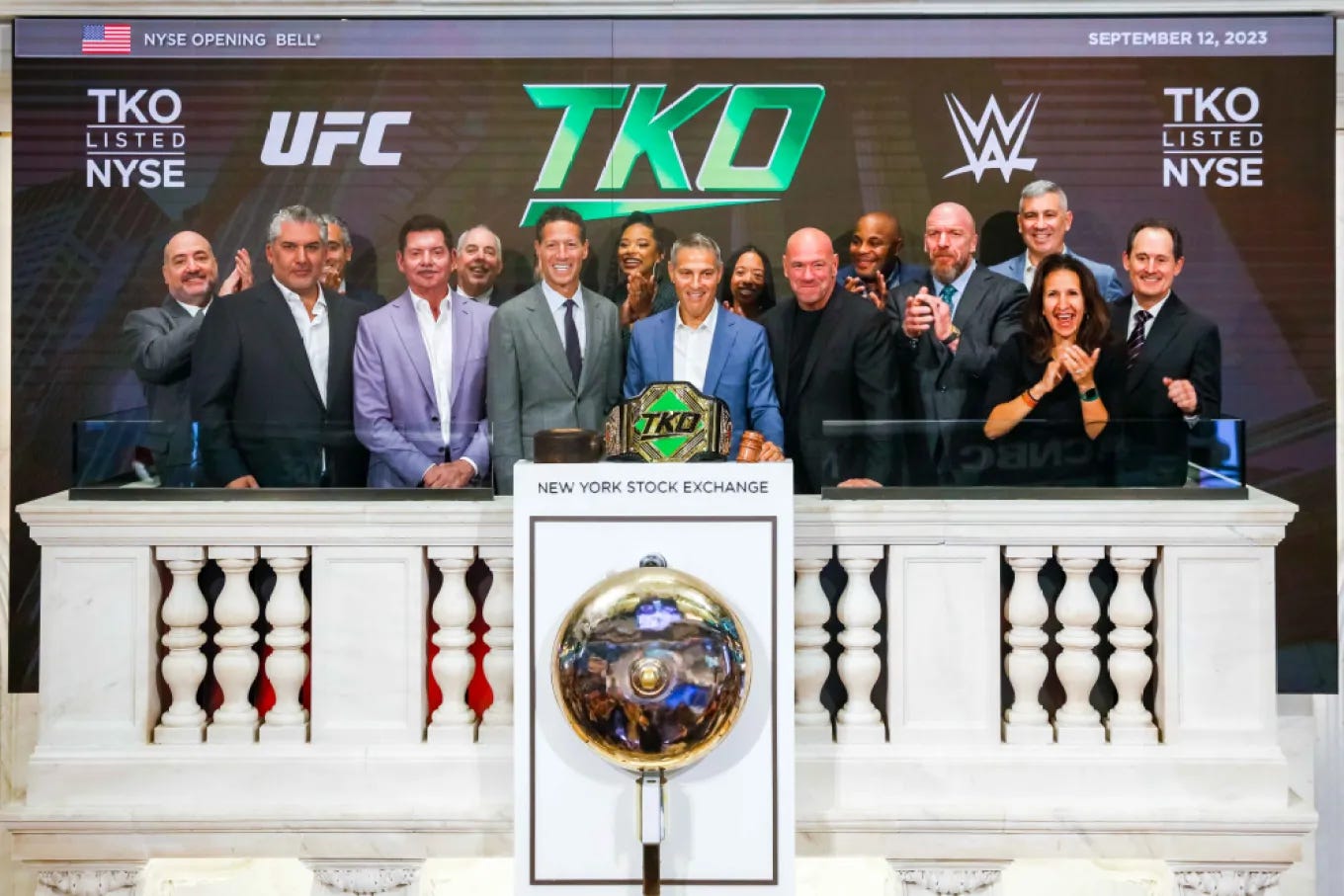
Inside TKO Group Holdings, discussions have included using existing partnership frameworks as a pathway to evaluate broader licensing or acquisition opportunities tied to the TNA archive as TKO’s long-term library strategy evolves heading into 2026. The live relationship functions less as a commitment and more as a live diligence mechanism.
That posture reflects a larger media reality. Live rights rotate. Libraries stabilize. Archives extend engagement during weeks when original programming thins and retention, not premieres, becomes the priority metric.
In that context, TNA’s tape library stands apart. Outside of WWE’s own holdings, no wrestling organization possesses a deeper archive of recognizable talent cycles, crossover stars, and historically relevant runs. The value is not nostalgia. It is utility. Decades of content featuring performers who later became global draws carry licensing weight far beyond the promotion’s current creative momentum.
WWE does not need to rush because time is not the constraint. Optionality is the asset.
ESPN Is Already Spending Like the Endgame Is Near
Once you accept that archives are leverage, ESPN’s posture becomes easier to read because it shows up everywhere.
In 2025, ESPN expanded the surface area of what it owns and distributes. Not just marquee nights, but the inventory that fills calendars, drives the app, and makes cancellation harder.
Start with wrestling. ESPN committed approximately $300M+ per year for WWE Premium Live Events beginning in 2026. That spend was not about novelty. It was about repeatable appointment viewing that plugs predictable gaps across the year and aligns with ESPN and Disney’s current audience composition.
Zoom out further. ESPN re-entered conference distribution through a 6-year digital agreement with the Big East Conference. Women’s sports followed the same logic, with an expanded National Women’s Soccer League deal designed to create consistent weekly cadence rather than episodic spikes.
Even long-tail professional inventory was secured. ESPN extended its relationship with Athletes Unlimited across multiple leagues. Baseball followed with a reshaped Major League Baseball agreement that preserved meaningful inventory while allowing other packages to move elsewhere.
All of this sits against the most consequential combat sports shift of the decade: UFC’s live rights move to Paramount Global in 2026 under a 7-year agreement valued at approximately $7.7B.
From the outside, it looks like ESPN traded UFC for WWE and paid a premium. Internally, it looks more like a portfolio realignment. WWE delivers repeatable, advertiser-friendly, appointment inventory that fits ESPN’s current ecosystem more cleanly than UFC’s escalating live-event economics.
When live programming exits a platform, historical libraries inherit the burden of retention.
That reality explains ESPN’s growing interest in premium archives, including the possibility of bundling multiple TKO Group Holdings libraries into a single long-term strategy. According to multiple sources familiar with the discussions, the objective is not a short-term rental. It is a landmark transaction structured around long-term control or exclusive licensing of legacy libraries, with a source indicating a targeted valuation in the $300M to $400M range depending on scope and duration.
That valuation range is consistent with how combat sports and wrestling archives have been treated in the modern media economy, where scarcity, brand recognition, and cross-platform utility converge.
UFC has long leveraged its historical catalog through UFC Fight Pass, prioritizing long-term subscriber retention and international scale over short-term licensing revenue.
By contrast, Bellator MMA’s library, acquired by the Professional Fighters League in 2023, remains a largely unrealized asset—valuable, but not yet fully deployed inside a scaled subscription ecosystem.
On the wrestling side, Ring of Honor’s archive immediately gained leverage once folded into All Elite Wrestling, enhancing weekly programming, pay-per-view storytelling, and long-tail engagement across multiple distribution windows.
The pattern is consistent: archives accrue value when placed inside platforms built to exploit depth and continuity, not when left dormant or monetized piecemeal.
There is also a structural reason Fight Pass now fits more naturally inside ESPN’s ecosystem. Once Endeavor divested its streaming technology division, UFC no longer controlled the infrastructure that made Fight Pass a true end-to-end, in-house platform. What remains is the content layer: the archive itself, prelims, and international feeder events; inventory that scales more efficiently when absorbed into a mature direct-to-consumer system rather than operating as a standalone destination.
On its own, that archive has meaningful but finite value. Combined with live developmental inventory and distributed through ESPN’s direct-to-consumer stack, the same content becomes a retention engine rather than a niche destination. The value is not just what the archive is worth in isolation. It is what prevents it from leaving.
Fight Pass Was Cleaned Before Anyone Admitted It
Earlier this year, I reported that ESPN had entered advanced talks to acquire UFC Fight Pass, intending to fold the full archive into ESPN’s U.S. direct-to-consumer ecosystem.
Subsequent developments reinforced that direction.
While LFA’s long-running Fight Pass agreement remains in place through December 31, 2025, emerging reporting indicates the promotion is preparing for a new broadcast home as UFC restructures its regional strategy.
Multiple sources familiar with the discussions say LFA declined revised Fight Pass terms that would have required TKO and UFC to own all underlying content. Those same sources point to Spectation Sports as the most likely landing spot for LFA’s next distribution deal.
Spectation Sports is a direct-to-consumer combat sports streaming platform focused on live and on-demand MMA and related fight content, including events from promotions such as Synergy FC, WFC, Cage Titans, Aries Fight Series, and IGNITE Fights, along with fight analysis and interactive features. The platform does not currently carry non-combat sports programming.
Samourai MMA and UAE Warriors publicly disputed the initial reports, with leadership from both organizations characterizing them as unfounded and confirming ongoing or renewed partnerships.
Unified MMA continues to appear in reports as a potential departure, with no public denials or confirmations of renewal, though a source has suggested Unified MMA may still be exploring alternative arrangements with its next event in February.
Lux Fight League still has strong ties to UFC Fight Pass, with its next event on February being advertised to be broadcast on Fight Pass.
Taken together, the pattern is consistent. As UFC transitions its core content to Paramount+, Fight Pass is being streamlined around stricter terms, fewer partners, and greater control over underlying rights. The promotions exiting the platform are not outliers. They are pressure points in a consolidation cycle.
ESPN remains the leading bidder to acquire the UFC Fight Pass library, with a potential WWE Vault component aligned to the expiration of the WWE–Peacock window at the end of 2025. At the same time, sources have indicated that Paramount’s near-term priorities have limited appetite for additional TKO-related rights spending beyond existing commitments.
That combination leaves ESPN as the most logical destination for both archives.
Netflix and the Discipline of Letting Others Blink
Netflix spent much of the year being labeled cautious. From the outside, the behavior reads as restraint. Inside the market, it looks more like discipline.
Earlier this year, I reported that the race for Formula 1’s U.S. media rights beginning in 2026 had narrowed to a two-player contest: Netflix versus Apple.
Netflix’s interest was real. It had helped build the modern American F1 audience and entered the process with credibility. What followed was less about desire than about posture.
Netflix has been consistent in how it describes its live strategy. Event-led, not schedule-bound. Big moments with global reach, without an obligation to subsidize quiet weeks or carry year-round inventory simply to justify sunk costs. That philosophy shaped its engagement with both F1 and UFC, where Netflix participated seriously during a 45-day exclusive window before ultimately stepping back as the economics escalated.
That escalation came quickly. Paramount Global reset the market with a seven-year commitment valued at approximately $7.7B for UFC rights. The number reframed expectations across live sports and clarified what participation would now require.
The irony surfaced later. Paramount’s aggressive capital deployment did not just ripple outward. When Warner Bros. Discovery’s board evaluated Paramount’s bid for WBD, the UFC commitment was cited as a negative, a signal that the market was already questioning how much was too much.
That is how rights inflation actually works. Big checks do not end negotiations. They force the next round of math, and that math eventually finds its way into the monthly bill.
Netflix understands the cycle. It is content to let someone else carry the first wave of cost, reset the market upward, and absorb the scrutiny that follows. In this phase, patience is not indecision. It is leverage deferred.
One Night That Justified the Strategy
Jake Paul vs. Anthony Joshua delivered 33M global viewers by average minute audience on Netflix, one of the largest live streaming audiences ever reported for a boxing event on the platform.
Netflix also reported the fight generated approximately 1.25 billion social impressions worldwide, a signal of how effectively the event traveled across markets and platforms.
Is Netflix’s vision of big-fight boxing distorting prize fighting?
“So, at the end of the day, despite it taking a little bit longer, what everyone expected came true. Sometimes that happens in life.” — Mauro Ranallo
Those numbers matter because they arrive without the burden of weekly production, long-term scheduling, or sustained overhead. One night produced global reach, cultural impact, and measurable engagement at a scale most live sports properties struggle to maintain over months.
According to multiple sources familiar with the deal structure, both fighters are expected to clear in excess of $45M once backend incentives are finalized and tax obligations are accounted for.
Based on publicly reported gross economics for comparable events, that outcome aligns with historical payout structures and places the night among the most lucrative single-event outcomes in modern boxing.
Finite events. Measurable outcomes. No obligation to carry quiet weeks.
For Netflix, that math works.
The Fight That Revealed How Hard This Business Actually Is
I’ve spent the past several months conducting reconnaissance on a potential Rico Verhoeven vs. Francis Ngannou super-fight for prospective partners, including ESPN and Netflix. Progress was slow in the way it only is when every moving part carries real gravity.
Once Ngannou’s involvement became central, momentum stalled. Stakeholders who initially engaged grew hesitant. Calls stopped getting returned. Follow-ups stretched into weeks. The deal froze precisely where coordination mattered most.
That hesitation did not appear in a vacuum. Ngannou’s public interview with Ariel Helwani reopened questions around communication, reliability, and decision-making tied to prior negotiations. Whatever the intent, the effect was immediate. In a business governed by trust and timelines, perception alone can arrest motion.
The missed opportunity that followed sharpened the issue. Ngannou declined a proposed fight with Jake Paul, a decision Paul’s camp later acknowledged was difficult to square.
Subsequent events only amplified the counterfactual. Anthony Joshua’s widely reported handling of Paul altered the risk calculus.
In hindsight, the fight Ngannou passed on likely would have favored him competitively while delivering a substantial payday without the coalition-building required for a cross-promotional super-fight.
In this business, turning down the wrong “easy money” can freeze momentum elsewhere by signaling unpredictability at the exact moment partners need certainty.
At the same time, multiple sources indicate GLORY Kickboxing and CEO Marshall Zelaznik are expected to part ways heading into 2026, closing a second tenure that never fully regained traction after the transition from Maurice Hols. Leadership uncertainty collapses risk tolerance. No one signs off on a swing while the foundation is shifting.
The proposal itself was simple. Consolidate GLORY’s video library with other kickboxing archives it controls, including a JV with Senchi Kickboxing. Package the history. Sell it as a premium archive play. Anchor the strategy with a one-off Verhoeven vs. Ngannou event, in partnership with Professional Fighters League, positioned for either ESPN or Netflix.
For GLORY, the upside was structural, not cosmetic. A fight of this magnitude creates immediate capital rejuvenation, restores global relevance, and reframes the promotion from stagnation to optionality. Instead, the opposite unfolded. Verhoeven exited.
Corporate filings in the UK began reflecting a behind-the-scenes struggle for control. Opportunities fragmented at the moment cohesion was required.
For PFL, the calculus is sharper. The promotion is heading toward a renegotiation window with ESPN in March 2026, with thinning leverage. There is no deep historical library. Appointment viewing remains inconsistent. What PFL is selling is governance and credibility, with John Martin positioned as the face of that pitch.
A one-off Ngannou vs. Verhoeven event would have offered scarcity instead of volume. Attention outside the seasonal grind. A chance to reset perception before negotiations begin rather than explain underperformance after the fact.
From the outside, deals like this get reduced to willpower. That framing is convenient. It is also incomplete.
Dana White often says that if you work hard enough and want something badly enough, you can achieve anything. It sounds good. It skips how deals at this level actually get made.
Fighters speak legacy. Promotions speak control. Networks speak churn. Financiers speak downside. Lawyers speak clauses. Ego fills the gaps.
Deals like this close through patience, leverage, and unglamorous work that never appears in a press release. They close when the right coalition forms, not when one party wants it badly enough.
“Never” is rarely a truth in this business. More often, it reflects leverage at a moment in time.
When leverage shifts, history has a way of circling back.
“Never say never” has never sounded more accurate.
Ultima Sententia
2025 did not punish ambition.
It punished naked ambition that confused visibility for leverage.
TNA re-entered the market the moment the AMC number put a floor under the asset. That did not buy time. It started the clock. ESPN spent the year stockpiling depth instead of chasing noise. WWE waited because it could. Netflix exercised restraint because the math supported it. PFL operated as if leverage resets itself.
It does not.
The same misread repeated itself across the industry. Confusing presence with position. Confusing continuity with insulation. Confusing survival with control.
That miscalculation is now converging around the most exposed deal on the board.
Paramount’s UFC rights deal no longer exists within a growth narrative. The attempt to force a broader strategic outcome elsewhere failed. The balance sheet tightened. The margin for error narrowed. In that environment, marquee rights deals stop being symbols of ambition and start becoming stress tests.
Warner Bros. Discovery never named the UFC deal directly, but its shareholder communications consistently emphasized discipline, flexibility, and resistance to long-term sports commitments that compress margins and limit optionality. Around the industry, that posture was read as a quiet rejection of exactly the kind of exposure Paramount chose to take on.
That context matters now.
If UFC and Zuffa Boxing stumble out of the gate in January, the response will extend far beyond a single weekend of fights. Early performance will shape how aggressively the deal is defended internally, how rivals frame it externally, and how quickly the narrative shifts from strategic investment to structural risk. Overpayments only stay invisible when momentum carries them. Just ask Apple and MLS.
None of what comes next will be announced.
It will surface quietly. In exits. In consolidation. In archives changing hands. In leadership moves that only make sense after the fact. In deals that happen not because someone wanted them to, but because the market finally forced them to.
When the tape finishes rewinding, the question will not be who survived the year.
It will be who understood that the market had already moved on.
To everyone in the combat sports ecosystem reading this: be different. Push the edges. Question the defaults. Build what hasn’t been built yet and don’t let yesterday’s models define tomorrow’s limits.
Happy New Year, everyone.
“Power is never lost. It is only redistributed.”
Hannah Arendt
Follow @bobby_s_axelrod on X and @blakeavignon on IG and subscribe to The MMA Draw and The Axe Files for sports intel, business crossovers, and breakdowns the mainstream won’t touch.
Blake Avignon is the pseudonym of a strategist and media executive who has worked across the UFC, F1, MLB, NBA, and NFL: building brands, brokering partnerships, and reshaping the future of sports and entertainment from the inside.


